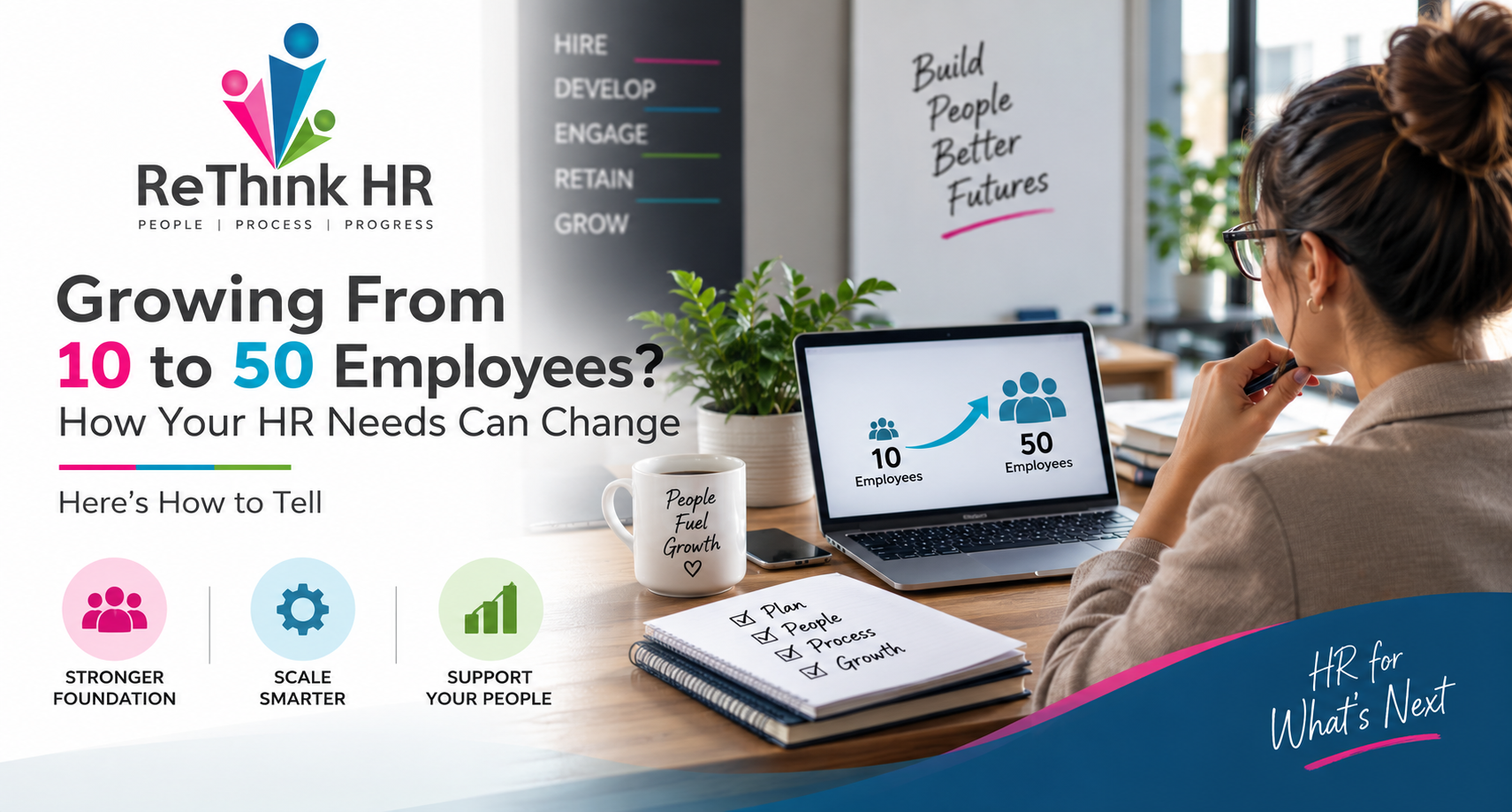
Growing a business from 10 employees to 50 is an exciting milestone. It usually means more customers, more opportunities, and a stronger team. But growth also creates new responsibilities that may not have been noticeable when the company was smaller.
With 10 employees, the owner may personally handle hiring, time-off requests, workplace concerns, and performance conversations. As the team grows, that informal approach becomes harder to manage consistently. HR needs to evolve alongside the business so employees understand expectations and managers have clear processes to follow.
Informal HR Processes Become Harder to Manage
In a small team, many decisions happen through conversations. An employee asks for time off, speaks directly with the owner about a concern, or receives feedback during a quick meeting.
That flexibility can work with a small workforce. With 30, 40, or 50 employees, however, relying entirely on verbal communication can create confusion. Different employees may receive different answers to similar questions, while managers may handle situations in different ways.
This is when businesses often begin creating more structured HR processes. Organizations that need outside guidance can work with Re Think HR to evaluate their current HR practices and determine where additional structure may be useful.
Hiring Needs to Become More Consistent
When a business is hiring occasionally, recruitment may be fairly informal. As the organization grows, hiring usually becomes more frequent and involves more managers.
Clear job descriptions, consistent interview processes, documented responsibilities, and organized candidate evaluation become increasingly valuable. They help managers understand what they are hiring for and give candidates clearer expectations about the position.
A consistent process also makes it easier to repeat what works as the company continues adding employees.
Onboarding Becomes More Than a First-Day Introduction
With 10 employees, a new hire might learn by sitting next to an experienced colleague and asking questions. That becomes less reliable as the organization expands.
Growing businesses benefit from a repeatable onboarding process covering company expectations, workplace policies, job responsibilities, training, communication tools, and who employees should contact when they need help.
Good onboarding is not simply completing paperwork. It helps new employees understand how the organization works and what successful performance looks like.
Compliance Responsibilities Need More Attention
Employment requirements can become more complex as a workforce grows. Some federal and state employment rules apply only after an employer reaches certain employee thresholds, while others may apply regardless of company size. Requirements can also vary depending on location and the specific circumstances of the business.
That makes compliance something to review during growth rather than after a workplace problem occurs. Employee classification, required notices, leave practices, recordkeeping, hiring procedures, workplace policies, and documentation may all deserve attention.
Businesses looking for HR compliance consulting in Windsor Locks CT can use professional guidance to review existing practices and identify areas that may need to change as the organization expands.
Managers Need Clearer Guidance
As businesses grow, owners usually cannot directly manage every employee. Team leaders, supervisors, and department managers begin taking responsibility for everyday people decisions.
Being excellent at a job, however, does not automatically prepare someone to manage employees.
New managers may need guidance on giving feedback, documenting performance concerns, responding to complaints, managing conflict, communicating expectations, and knowing when an issue should be escalated.
Without clear guidance, two managers can respond very differently to the same situation. Consistent management practices help create a more predictable employee experience.
Performance Management Needs More Structure
In a 10-person company, an owner may know exactly how every employee is performing. At 50 employees, that becomes much more difficult.
Growing organizations often need clearer performance expectations, regular feedback, documented goals, and a consistent approach to performance reviews.
Employees should understand what is expected of them, where they are doing well, and where improvement is needed. Managers also benefit because structured performance conversations make it easier to address concerns before they become larger problems.
Workforce Planning Becomes Important
Growth is not simply about hiring more people. A business also needs to think about which roles it will need next, what skills may be missing, who could develop into leadership positions, and how responsibilities should change as the company becomes larger.
This is where human capital management becomes especially relevant. Affordable human capital management services in Bloomfield can help businesses think more strategically about recruitment, employee development, performance, retention, and workforce planning instead of treating each HR issue separately.
Employee Communication Changes as the Team Expands
Information spreads quickly among 10 people. With 50 employees, communication becomes more challenging.
Employees may work in different departments, report to different managers, or receive information at different times. Businesses therefore need reliable ways to communicate policy updates, organizational changes, benefits information, workplace expectations, and other important messages.
Clear communication can reduce misunderstandings and help employees feel connected as the organization grows.
When Should a Growing Business Review Its HR?
There is no single employee number that means every business suddenly needs a completely different HR system. A better approach is to review HR whenever growth begins creating complexity.
Warning signs can include inconsistent policies, frequent hiring, increasing employee complaints, unclear responsibilities, manager confusion, high turnover, or important HR tasks repeatedly being delayed.
Final Thoughts
Growing from 10 to 50 employees changes more than the size of a payroll. It changes how a company hires, communicates, manages performance, develops leaders, handles compliance, and plans for the future.
Processes that worked well for a small team may need more structure as the workforce expands. Reviewing HR practices during growth can help business owners identify gaps early, give managers clearer guidance, and create a more consistent experience for employees.
The goal is not to create unnecessary rules. It is to build HR practices that can grow with the business instead of waiting until people-related challenges become harder to manage.