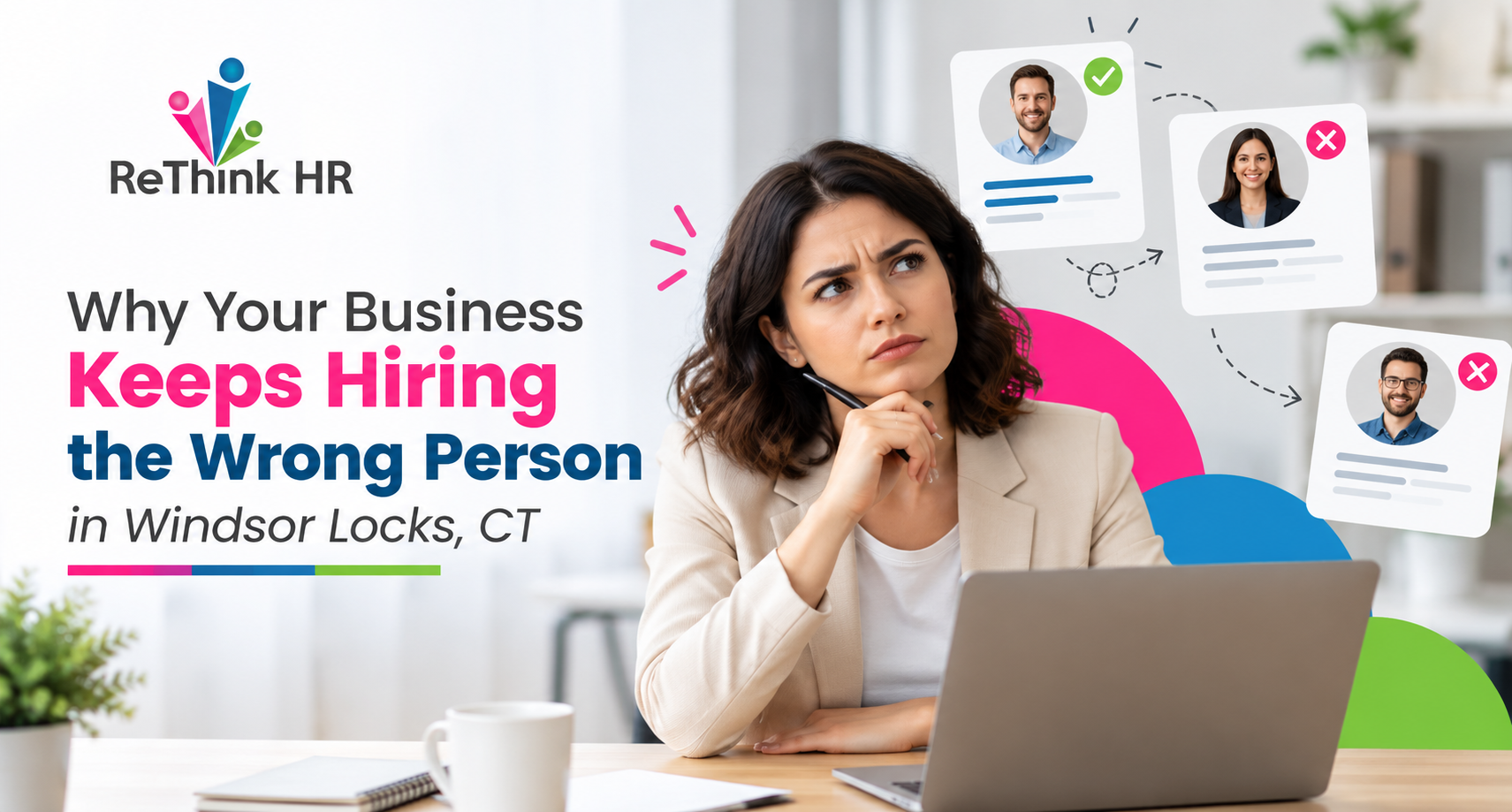
Hiring a new employee can feel like a straightforward process. You create a job description, review applications, conduct interviews, and choose the person who seems like the right fit. Yet sometimes, an employee who looked perfect during the hiring process does not perform as expected after joining the company. This can leave business owners wondering why they keep hiring the wrong person.
The problem is not always that the candidate was unqualified. In many cases, the hiring process itself may need improvement. Businesses in Windsor Locks, CT, and surrounding communities can benefit from taking a closer look at how they define roles, evaluate candidates, and make hiring decisions.
The Job Description May Not Clearly Define the Role
One common reason businesses hire the wrong person is an unclear job description. If the responsibilities, expectations, required skills, and working conditions are not clearly explained, candidates may apply without fully understanding what the position involves.
A strong job description should explain what the employee will actually do on a regular basis. It should also distinguish between skills that are essential and those that can be developed through training. Clear expectations help attract candidates who are genuinely suited to the position.
Hiring Based Only on Experience Can Be Misleading
Experience is important, but it should not be the only factor considered during hiring. Someone may have several years of experience but still struggle in a particular workplace because their communication style, problem-solving approach, or expectations do not match the role.
Businesses should look at a combination of experience, skills, behavior, adaptability, and ability to work within the organization’s environment. A structured evaluation process can make it easier to compare candidates based on the same factors rather than making decisions based primarily on first impressions.
Interviews May Not Be Structured Enough
An informal interview can create problems when every candidate is asked different questions. It becomes difficult to compare applicants fairly, and interviewers may unintentionally focus too much on personality or personal impressions.
Using consistent questions for candidates applying for the same role can create a clearer evaluation process. Questions should focus on situations the employee may actually face. Asking candidates how they handled workplace challenges, solved problems, worked with a team, or responded to feedback can provide useful information beyond what appears on a résumé.
The Company May Not Be Defining Its Ideal Candidate
Before recruiting, employers should understand what success looks like in the position. This includes more than writing down a list of qualifications.
For example, a business may need someone who can work independently, communicate with customers, manage changing priorities, or collaborate with a small team. If these expectations are not identified before recruitment begins, the hiring team may focus on candidates who look impressive on paper but do not meet the actual needs of the business.
A clear hiring framework can help businesses identify the skills and behaviors that are genuinely important for the role.
Poor Onboarding Can Make a Good Hire Look Like a Bad Hire
Sometimes, the hiring decision is not the real problem. The employee may have the right skills but receive little guidance after starting the job.
Effective onboarding should introduce employees to their responsibilities, workplace policies, team members, systems, and performance expectations. New employees also need opportunities to ask questions and understand how their work will be evaluated.
A well-planned onboarding process can help both the employee and employer determine whether expectations are being met early rather than waiting until a serious performance issue develops.
HR Support Can Improve the Hiring Process
Businesses that repeatedly struggle with hiring may benefit from reviewing their overall HR process. An HR professional can help evaluate job descriptions, interview procedures, hiring criteria, documentation, onboarding, and employee expectations.
For businesses that also need help maintaining workplace policies and meeting employment requirements, HR compliance consulting in Windsor Locks CT can provide support in developing more consistent HR practices.
For growing organizations, human resources is not only about hiring. It also involves developing employees, managing performance, creating policies, supporting leadership, and building systems that can grow with the business.
Hiring Should Be a Process, Not a Guess
There is no hiring process that guarantees every new employee will be a perfect match. However, businesses can reduce avoidable hiring mistakes by clearly defining roles, using structured interviews, evaluating candidates against consistent criteria, and providing proper onboarding.
The goal is not simply to find someone who looks good on paper. It is to understand what the business needs and determine whether a candidate can realistically meet those expectations.
Businesses looking for broader HR support may also explore affordable human capital management services in Bloomfield to develop stronger systems for managing employees throughout their time with the organization.
In the long term, a thoughtful hiring process can save businesses time, reduce unnecessary turnover, improve employee performance, and create a more consistent workplace. For employers in Windsor Locks, CT, reviewing the hiring process may be an important first step when the same hiring problems keep happening.