15Oct

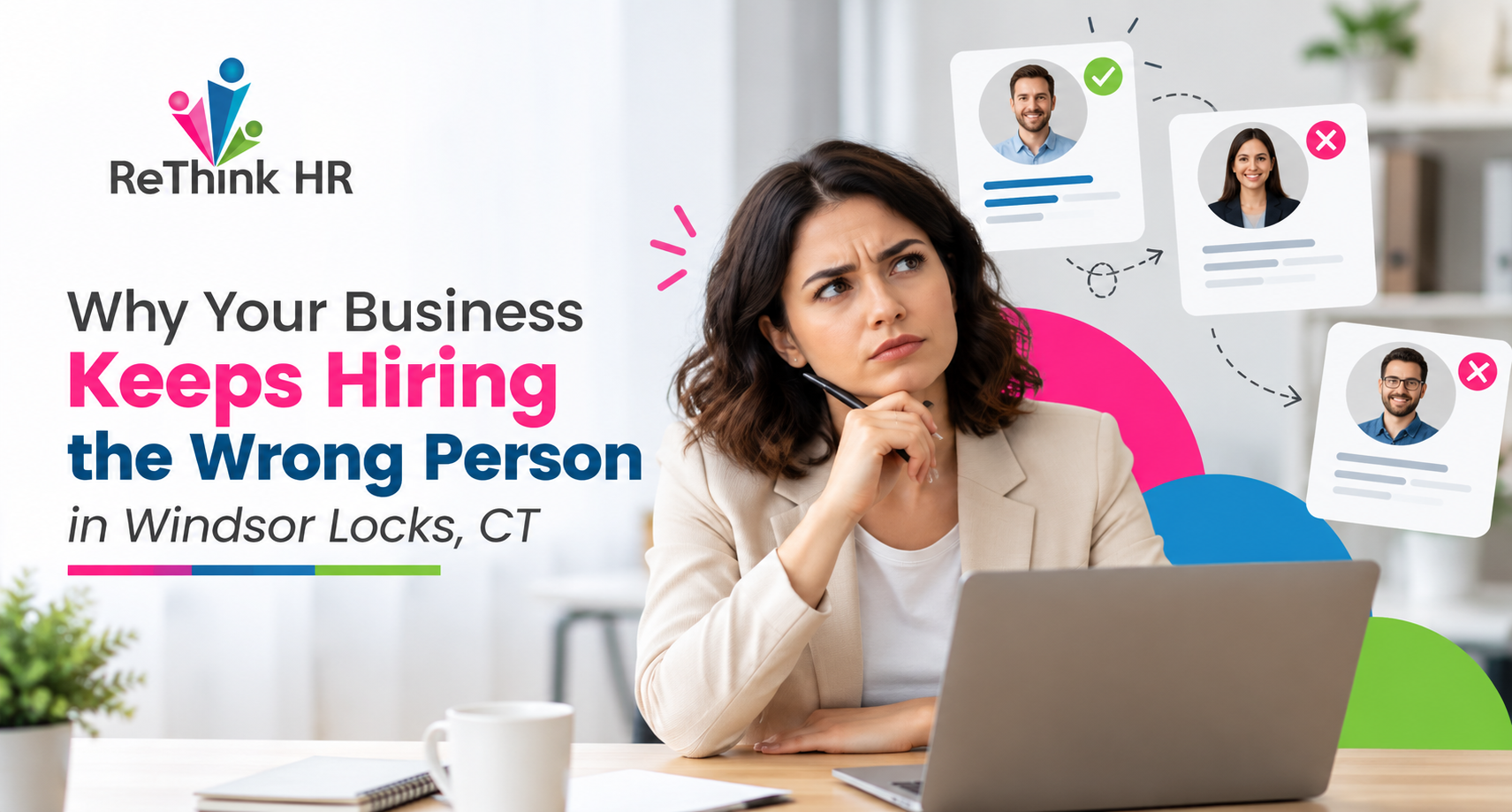
Why Your Business Keeps Hiring the Wrong Person in Windsor Locks, CT

Hiring a new employee can feel like a straightforward process. You create a job description, review applications, conduct interviews, and choose the person who seems like the right fit. Yet sometimes, an employee who looked perfect during the hiring process does not perform as expected after joining the company. This can leave business owners wondering why they keep hiring the wrong person.

The problem is not always that the candidate was unqualified. In many cases, the hiring process itself may need improvement. Businesses in Windsor Locks, CT, and surrounding communities can benefit from taking a closer look at how they define roles, evaluate candidates, and make hiring decisions.

The Job Description May Not Clearly Define the Role

One common reason businesses hire the wrong person is an unclear job description. If the responsibilities, expectations, required skills, and working conditions are not clearly explained, candidates may apply without fully understanding what the position involves.

A strong job description should explain what the employee will actually do on a regular basis. It should also distinguish between skills that are essential and those that can be developed through training. Clear expectations help attract candidates who are genuinely suited to the position.

Hiring Based Only on Experience Can Be Misleading

Experience is important, but it should not be the only factor considered during hiring. Someone may have several years of experience but still struggle in a particular workplace because their communication style, problem-solving approach, or expectations do not match the role.

Businesses should look at a combination of experience, skills, behavior, adaptability, and ability to work within the organization’s environment. A structured evaluation process can make it easier to compare candidates based on the same factors rather than making decisions based primarily on first impressions.

Interviews May Not Be Structured Enough

An informal interview can create problems when every candidate is asked different questions. It becomes difficult to compare applicants fairly, and interviewers may unintentionally focus too much on personality or personal impressions.

Using consistent questions for candidates applying for the same role can create a clearer evaluation process. Questions should focus on situations the employee may actually face. Asking candidates how they handled workplace challenges, solved problems, worked with a team, or responded to feedback can provide useful information beyond what appears on a résumé.

The Company May Not Be Defining Its Ideal Candidate

Before recruiting, employers should understand what success looks like in the position. This includes more than writing down a list of qualifications.

For example, a business may need someone who can work independently, communicate with customers, manage changing priorities, or collaborate with a small team. If these expectations are not identified before recruitment begins, the hiring team may focus on candidates who look impressive on paper but do not meet the actual needs of the business.

A clear hiring framework can help businesses identify the skills and behaviors that are genuinely important for the role.

Poor Onboarding Can Make a Good Hire Look Like a Bad Hire

Sometimes, the hiring decision is not the real problem. The employee may have the right skills but receive little guidance after starting the job.

Effective onboarding should introduce employees to their responsibilities, workplace policies, team members, systems, and performance expectations. New employees also need opportunities to ask questions and understand how their work will be evaluated.

A well-planned onboarding process can help both the employee and employer determine whether expectations are being met early rather than waiting until a serious performance issue develops.

HR Support Can Improve the Hiring Process

Businesses that repeatedly struggle with hiring may benefit from reviewing their overall HR process. An HR professional can help evaluate job descriptions, interview procedures, hiring criteria, documentation, onboarding, and employee expectations.

For businesses that also need help maintaining workplace policies and meeting employment requirements, HR compliance consulting in Windsor Locks CT can provide support in developing more consistent HR practices.

For growing organizations, human resources is not only about hiring. It also involves developing employees, managing performance, creating policies, supporting leadership, and building systems that can grow with the business.

Hiring Should Be a Process, Not a Guess

There is no hiring process that guarantees every new employee will be a perfect match. However, businesses can reduce avoidable hiring mistakes by clearly defining roles, using structured interviews, evaluating candidates against consistent criteria, and providing proper onboarding.

The goal is not simply to find someone who looks good on paper. It is to understand what the business needs and determine whether a candidate can realistically meet those expectations.

Businesses looking for broader HR support may also explore affordable human capital management services in Bloomfield to develop stronger systems for managing employees throughout their time with the organization.

In the long term, a thoughtful hiring process can save businesses time, reduce unnecessary turnover, improve employee performance, and create a more consistent workplace. For employers in Windsor Locks, CT, reviewing the hiring process may be an important first step when the same hiring problems keep happening.
10Oct

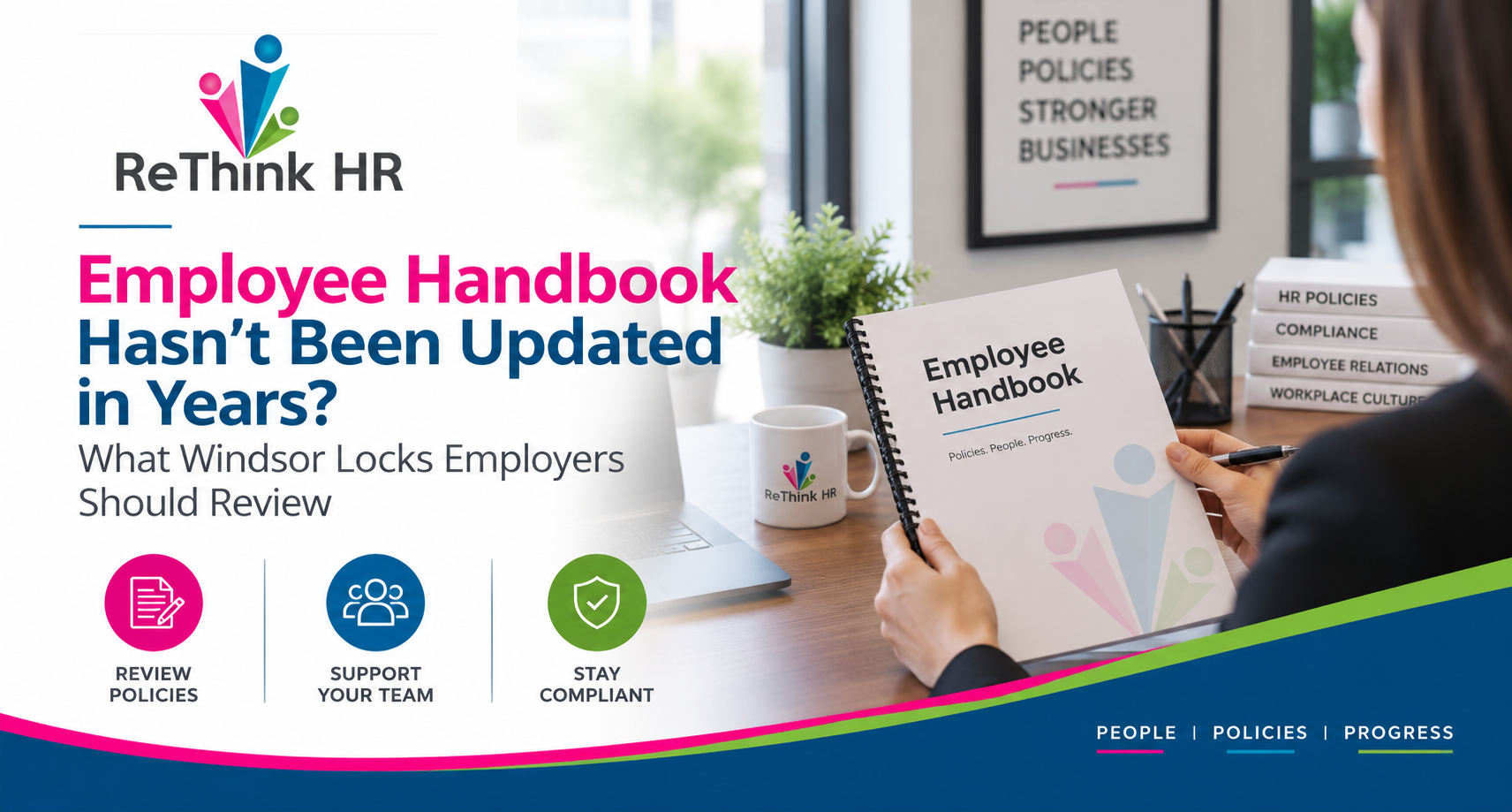
Employee Handbook Hasn’t Been Updated in Years? What Windsor Locks Employers Should Review

An employee handbook can easily become one of those documents a business creates once and rarely looks at again. Employees receive it when they are hired, managers refer to it occasionally, and over time the business continues to change while the handbook stays the same.

For Windsor Locks employers, an outdated handbook can create confusion when written policies no longer match current workplace practices or legal requirements. Connecticut employment rules also change over time. For example, Connecticut expanded its paid sick leave requirements beginning in 2025, with another expansion taking effect in 2026. This makes periodic handbook reviews an important part of managing a workplace.

Start With Policies That No Longer Match Reality

One of the easiest ways to identify an outdated handbook is to compare it with how the company actually operates today.

Perhaps the handbook says employees work only from the office, but some positions are now hybrid. Maybe working hours, attendance procedures, benefits, reporting structures, or time-off processes have changed. Employees may also be using communication platforms or personal devices that did not exist when the handbook was written.

A review with Re Think HR can help employers identify areas where written policies and everyday practices have moved in different directions.

Review Paid Sick Leave and Other Leave Policies

Leave policies deserve particular attention because state requirements can change.

Connecticut’s paid sick leave law expanded to employers with 11 or more employees beginning January 1, 2026. Covered employees generally accrue one hour of paid sick leave for every 30 hours worked, up to 40 hours annually, subject to the law’s requirements and exceptions.

Employers should review handbook language about sick time, family and medical leave, other time off, eligibility, notification procedures, and related policies. Connecticut has separate leave programs, so employers should avoid treating every type of leave as though the same rules apply.

Look at Harassment and Complaint Procedures

Employees should know where to go when they experience or witness inappropriate workplace behavior.

An older handbook may name a person who no longer works for the company or provide only one reporting option. It may also contain language that no longer reflects current company procedures.

Connecticut’s CHRO provides specific sexual-harassment prevention requirements and resources. Employers with three or more employees have training and information obligations, while requirements also apply to supervisors in smaller workplaces.

Businesses seeking HR compliance consulting in Windsor Locks CT can use a handbook review as an opportunity to examine whether complaint procedures, manager responsibilities, required notices, and related practices are consistent with current requirements.

Check Attendance and Flexible Work Policies

Workplace expectations have changed significantly for many businesses. Remote work, hybrid schedules, flexible hours, and digital communication can create situations that an older handbook never addressed.

Employers should ask simple questions. How should employees report an absence? Who approves schedule changes? Are remote employees expected to be available during specific hours? How are repeated attendance problems handled?

The goal is not necessarily to create more rules. It is to make expectations understandable so employees and managers are working from the same information.

Review Performance and Discipline Language

An employee handbook should also support consistent management.

If one manager gives several informal warnings while another immediately starts a formal disciplinary process for a similar issue, employees can become confused about expectations. An outdated or unclear handbook can contribute to that inconsistency.

Review sections covering performance expectations, workplace conduct, attendance, disciplinary processes, and reporting responsibilities. The written policy should accurately reflect the company’s current approach while giving management appropriate flexibility.

Don’t Forget Technology and Workplace Communication

Technology policies can become outdated particularly quickly.

A handbook written years ago may say little about remote access, company devices, passwords, social media, confidential business information, messaging platforms, artificial intelligence tools, or cybersecurity responsibilities.

Employers do not need to predict every new technology. However, they should consider whether employees understand appropriate use of company systems and how confidential information should be handled.

Make Sure Managers Understand the Handbook Too

Updating the document is only part of the job. Managers need to understand how policies should work in everyday situations.

For example, a manager may receive an accommodation request, employee complaint, leave question, or performance concern before HR knows about it. If the manager responds incorrectly or inconsistently, a well-written policy sitting in a handbook will not solve the problem.

This is where broader workforce support, such as Affordable human capital management services in Bloomfield, can be relevant. Connecting written policies with manager training, employee communication, and consistent processes helps turn the handbook into a practical workplace resource.

Avoid Copying Another Company’s Handbook

Downloading a template can provide a starting point, but every workplace is different. Company size, industry, employee locations, benefits, scheduling arrangements, remote-work practices, and internal procedures can affect what belongs in a handbook.

Policies should also avoid promising something the company cannot consistently deliver. Employers should have employment counsel or a qualified HR professional review legal language when appropriate, particularly when policies involve changing federal or Connecticut requirements.

How Often Should an Employee Handbook Be Reviewed?

There is no single review schedule that fits every employer. A practical approach is to review the handbook regularly and whenever there is a significant legal, operational, or workforce change.

A handbook that was accurate several years ago should not automatically be assumed to be accurate today. Connecticut’s recent paid sick leave expansion is a good example of why ongoing review matters.

Final Thoughts

An employee handbook should reflect the workplace employees are actually working in today-not the business as it operated five years ago.

Windsor Locks employers should periodically review leave policies, complaint procedures, attendance expectations, performance practices, technology rules, flexible-work arrangements, and manager responsibilities. When policies are clear, current, and consistently applied, the handbook becomes more than paperwork. It becomes a useful reference that helps employees understand expectations and gives managers a clearer framework for handling everyday workplace situations.

02Oct

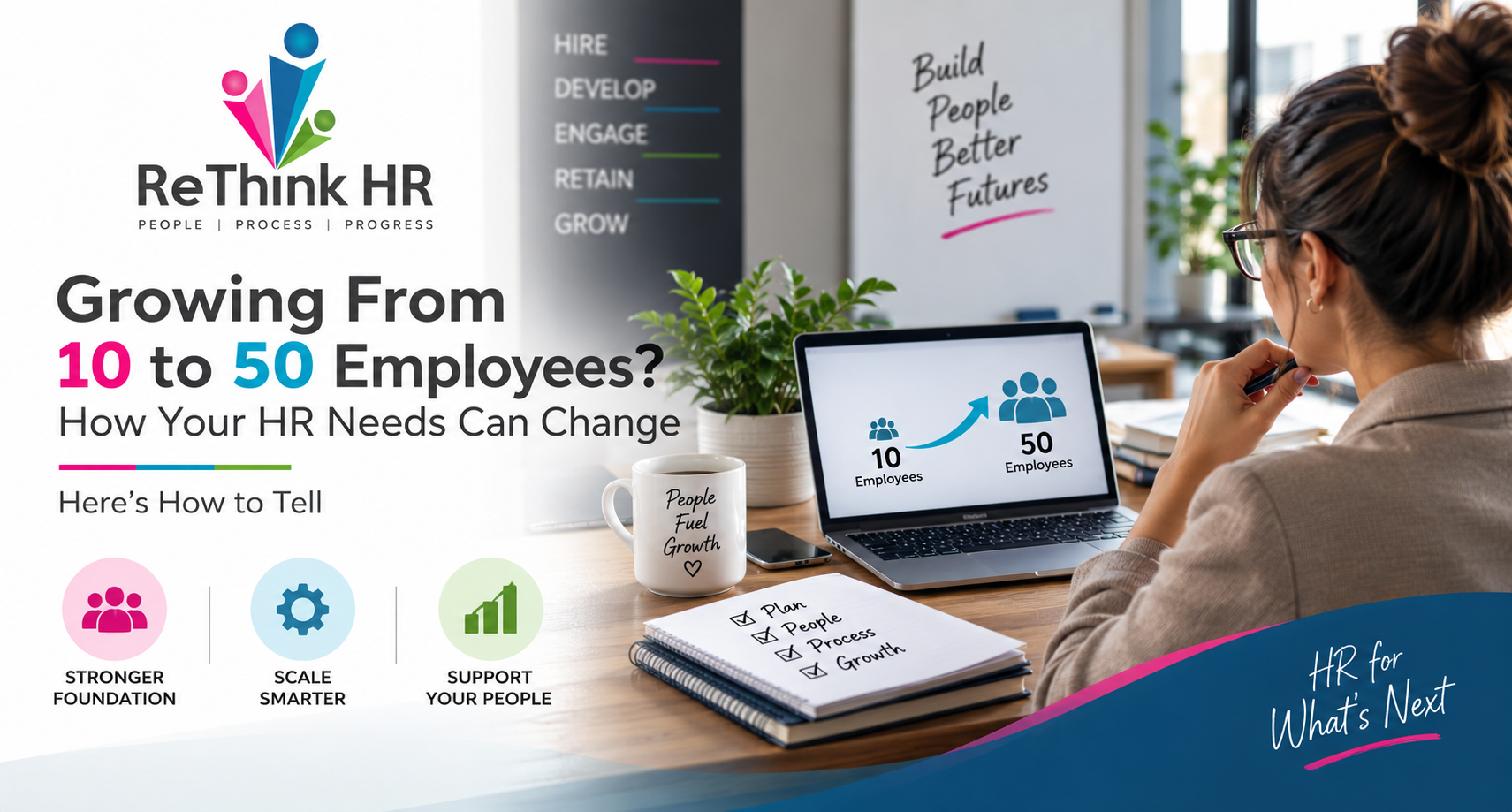
Growing From 10 to 50 Employees? How Your HR Needs Can Change

Growing a business from 10 employees to 50 is an exciting milestone. It usually means more customers, more opportunities, and a stronger team. But growth also creates new responsibilities that may not have been noticeable when the company was smaller.

With 10 employees, the owner may personally handle hiring, time-off requests, workplace concerns, and performance conversations. As the team grows, that informal approach becomes harder to manage consistently. HR needs to evolve alongside the business so employees understand expectations and managers have clear processes to follow.

Informal HR Processes Become Harder to Manage

In a small team, many decisions happen through conversations. An employee asks for time off, speaks directly with the owner about a concern, or receives feedback during a quick meeting.

That flexibility can work with a small workforce. With 30, 40, or 50 employees, however, relying entirely on verbal communication can create confusion. Different employees may receive different answers to similar questions, while managers may handle situations in different ways.

This is when businesses often begin creating more structured HR processes. Organizations that need outside guidance can work with Re Think HR to evaluate their current HR practices and determine where additional structure may be useful.

Hiring Needs to Become More Consistent

When a business is hiring occasionally, recruitment may be fairly informal. As the organization grows, hiring usually becomes more frequent and involves more managers.

Clear job descriptions, consistent interview processes, documented responsibilities, and organized candidate evaluation become increasingly valuable. They help managers understand what they are hiring for and give candidates clearer expectations about the position.

A consistent process also makes it easier to repeat what works as the company continues adding employees.

Onboarding Becomes More Than a First-Day Introduction

With 10 employees, a new hire might learn by sitting next to an experienced colleague and asking questions. That becomes less reliable as the organization expands.

Growing businesses benefit from a repeatable onboarding process covering company expectations, workplace policies, job responsibilities, training, communication tools, and who employees should contact when they need help.

Good onboarding is not simply completing paperwork. It helps new employees understand how the organization works and what successful performance looks like.

Compliance Responsibilities Need More Attention

Employment requirements can become more complex as a workforce grows. Some federal and state employment rules apply only after an employer reaches certain employee thresholds, while others may apply regardless of company size. Requirements can also vary depending on location and the specific circumstances of the business.

That makes compliance something to review during growth rather than after a workplace problem occurs. Employee classification, required notices, leave practices, recordkeeping, hiring procedures, workplace policies, and documentation may all deserve attention.

Businesses looking for HR compliance consulting in Windsor Locks CT can use professional guidance to review existing practices and identify areas that may need to change as the organization expands.

Managers Need Clearer Guidance

As businesses grow, owners usually cannot directly manage every employee. Team leaders, supervisors, and department managers begin taking responsibility for everyday people decisions.

Being excellent at a job, however, does not automatically prepare someone to manage employees.

New managers may need guidance on giving feedback, documenting performance concerns, responding to complaints, managing conflict, communicating expectations, and knowing when an issue should be escalated.

Without clear guidance, two managers can respond very differently to the same situation. Consistent management practices help create a more predictable employee experience.

Performance Management Needs More Structure

In a 10-person company, an owner may know exactly how every employee is performing. At 50 employees, that becomes much more difficult.

Growing organizations often need clearer performance expectations, regular feedback, documented goals, and a consistent approach to performance reviews.

Employees should understand what is expected of them, where they are doing well, and where improvement is needed. Managers also benefit because structured performance conversations make it easier to address concerns before they become larger problems.

Workforce Planning Becomes Important

Growth is not simply about hiring more people. A business also needs to think about which roles it will need next, what skills may be missing, who could develop into leadership positions, and how responsibilities should change as the company becomes larger.

This is where human capital management becomes especially relevant. Affordable human capital management services in Bloomfield can help businesses think more strategically about recruitment, employee development, performance, retention, and workforce planning instead of treating each HR issue separately.

Employee Communication Changes as the Team Expands

Information spreads quickly among 10 people. With 50 employees, communication becomes more challenging.

Employees may work in different departments, report to different managers, or receive information at different times. Businesses therefore need reliable ways to communicate policy updates, organizational changes, benefits information, workplace expectations, and other important messages.

Clear communication can reduce misunderstandings and help employees feel connected as the organization grows.

When Should a Growing Business Review Its HR?

There is no single employee number that means every business suddenly needs a completely different HR system. A better approach is to review HR whenever growth begins creating complexity.

Warning signs can include inconsistent policies, frequent hiring, increasing employee complaints, unclear responsibilities, manager confusion, high turnover, or important HR tasks repeatedly being delayed.

Final Thoughts

Growing from 10 to 50 employees changes more than the size of a payroll. It changes how a company hires, communicates, manages performance, develops leaders, handles compliance, and plans for the future.

Processes that worked well for a small team may need more structure as the workforce expands. Reviewing HR practices during growth can help business owners identify gaps early, give managers clearer guidance, and create a more consistent experience for employees.

The goal is not to create unnecessary rules. It is to build HR practices that can grow with the business instead of waiting until people-related challenges become harder to manage.